Why Not Induction? The Thinking Behind ElementOne
Why did OLIS choose resistance heating over induction? Discover how ElementOne prioritizes cookware compatibility, portability, precision, and repairability. Designed as a concise, search-friendly summary that explains the article and introduces ElementOne's benefits.
When developing the ElementOne, our goal wasn’t simply to create another electric stove. We wanted to build a compact, durable, and intelligent cooking solution that goes almost anywhere with you.
The following points are some key aspects as to why electric resistance heating is better than induction:
1. Cook With the Pans You Already Own
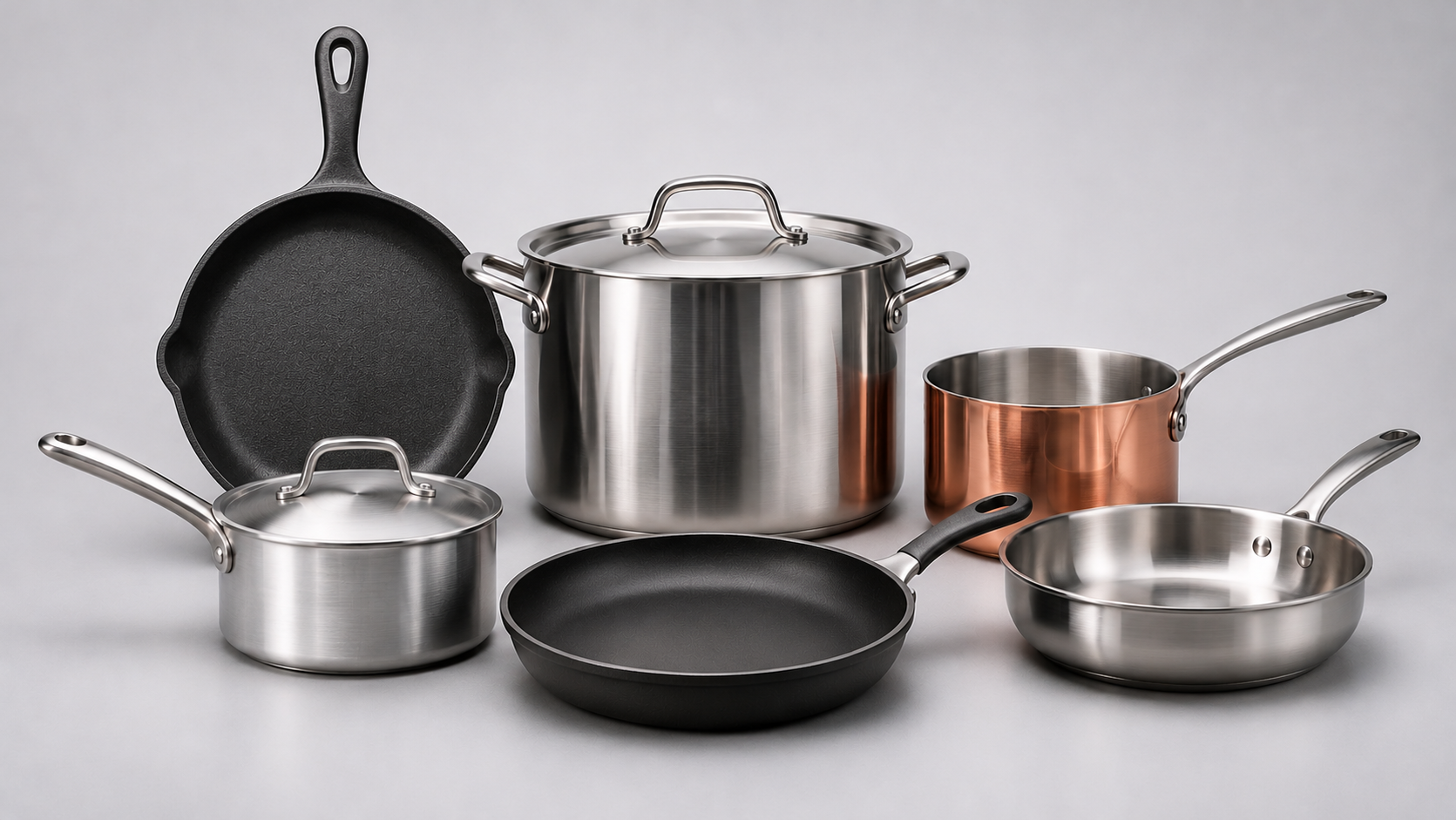
An induction stove uses electromagnetic fields to heat cookware, while this is energy efficient, this technology requires a specific type of cookware with a magnetic base to interface with the induction stove.
This simply means that aluminum, copper, glass, and nonmagnetic stainless cookware cannot work without a proper adapter with an induction stove.
ElementOne takes a different approach. Its electrical resistive heating system transfers heat directly through the cooking surface, allowing the user to access a wider variety of everyday cookware without worrying about magnetic compatibility.
Your cookware. Your choice.
2. Build for Adventures, Not Just Countertops
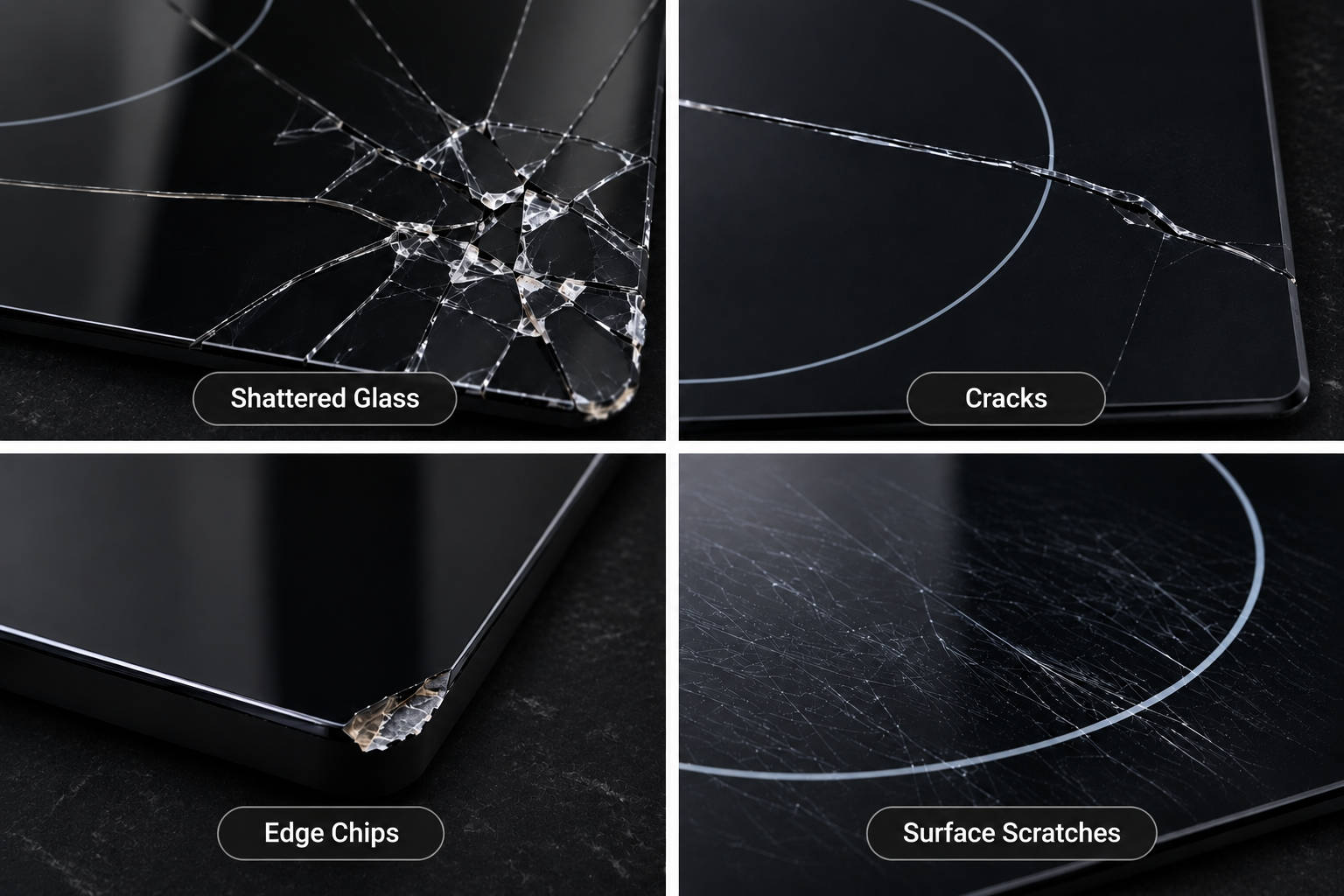
Most induction cooktops rely on a glass ceramic surface to rest your cookware on top. While durable for everyday kitchen use, these surfaces can wear out overtime and be susceptible to scratches or cracks from impacts and rough handling.
ElementOne was designed with portability in mind.
With corrosion-resistant 316 stainless steel exterior components, a reinforced glass-filled nylon enclosure, and a compact modular architecture, ElementOne is built for cooking beyond the kitchen, whether you’re traveling in an RV, preparing meals at a campsite, or cooking in a small living space.
ElementOne can travel with you.
3. More Than Just a Power Setting

Many conventional electric stoves rely on numbered power settings, leaving you to estimate how hot your cooking surface or pan actually is.
ElementOne brings a smarter approach.
With the help of its external temperature probe positioned close to the heating element and where your cookware rests, the system is able to measure the temperature, verify if it's at the set temperature and adapt accordingly, while providing you with temperature information.
This electronically controlled heating system is actually performed 60 times per second to help maintain your selected cooking-surface temperature, with settings ranging from 120°F
to 575°F (50°C to 300°C).
If you set it to 300°F, you will get 300°F, no more guessing.
4. Designed to Be Maintained, Not Discarded
We believe good products should be built with their entire lifespan in mind, not just the first 1-2 years.
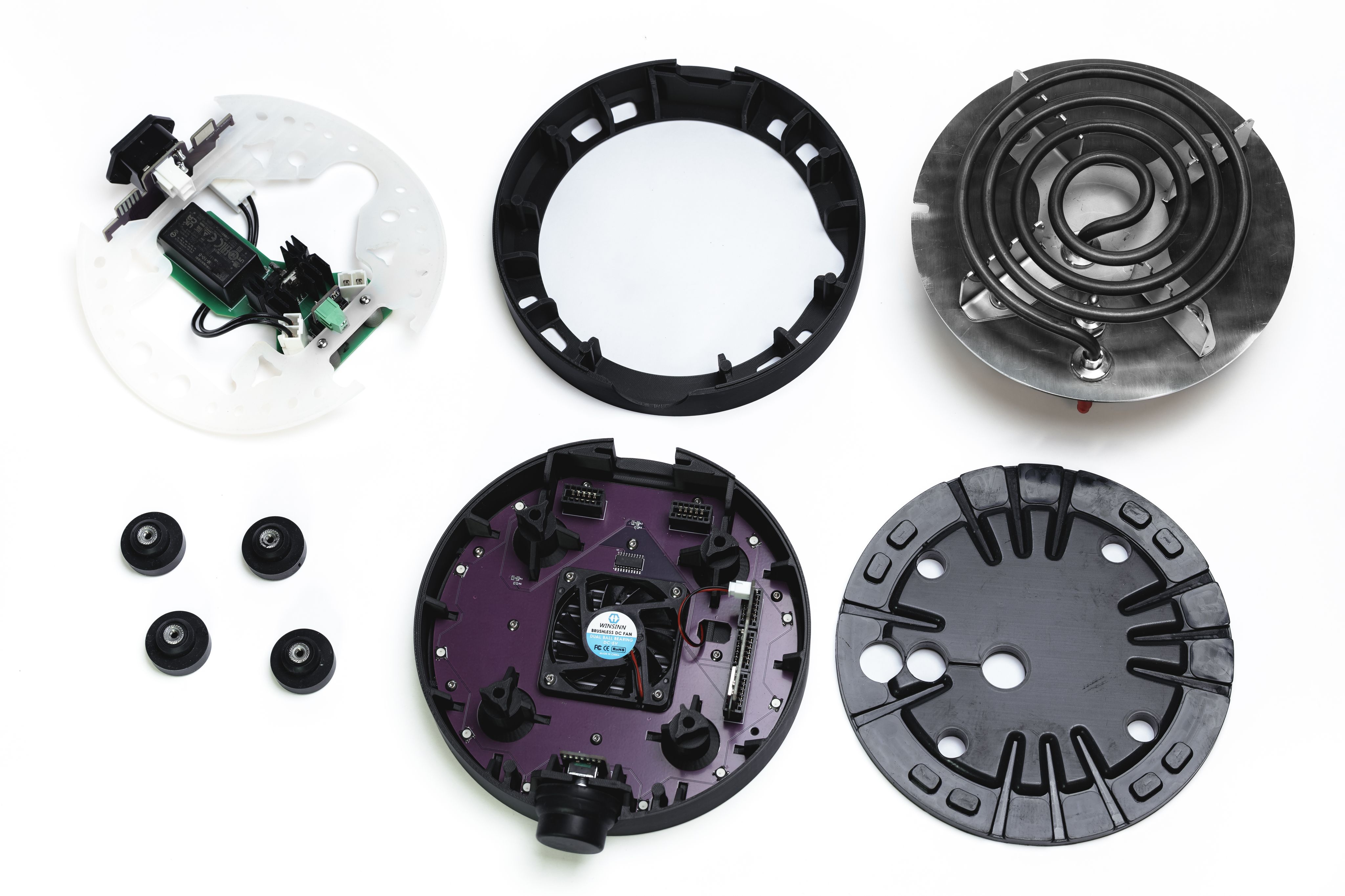
ElementOne was built around a modular design with repairability and longevity in mind. It features seven replaceable modular circuit boards, each responsible for a dedicated function. This architecture allows individual components to be serviced or replaced without necessarily replacing the entire appliance.
Our objective is simple: make a cooking device that is easier to maintain, upgrade, keep in service and help reduce waste to improve our environment.
So, Is Induction Better?
In terms of heating efficiency and boiling speed, induction has an advantage over conventional electric resistance cooking.
But efficiency is only one part of the equation.
For ElementOne, we prioritized cookware flexibility, compactness, modular design and repairability, along with intelligent temperature control.
We didn’t set out to reinvent induction.
We set out to rethink what a portable electric stove should be.