Our Story
At OLIS Electronics, innovation has always been at the heart of everything we do.
Our journey began with a simple idea: to create a cooking solution that combines modern technology with the timeless art of culinary creativity.
Inspired by a passion for both engineering and food, our team set out to design a product that would make cooking easier, more efficient, and tailored towards your needs.
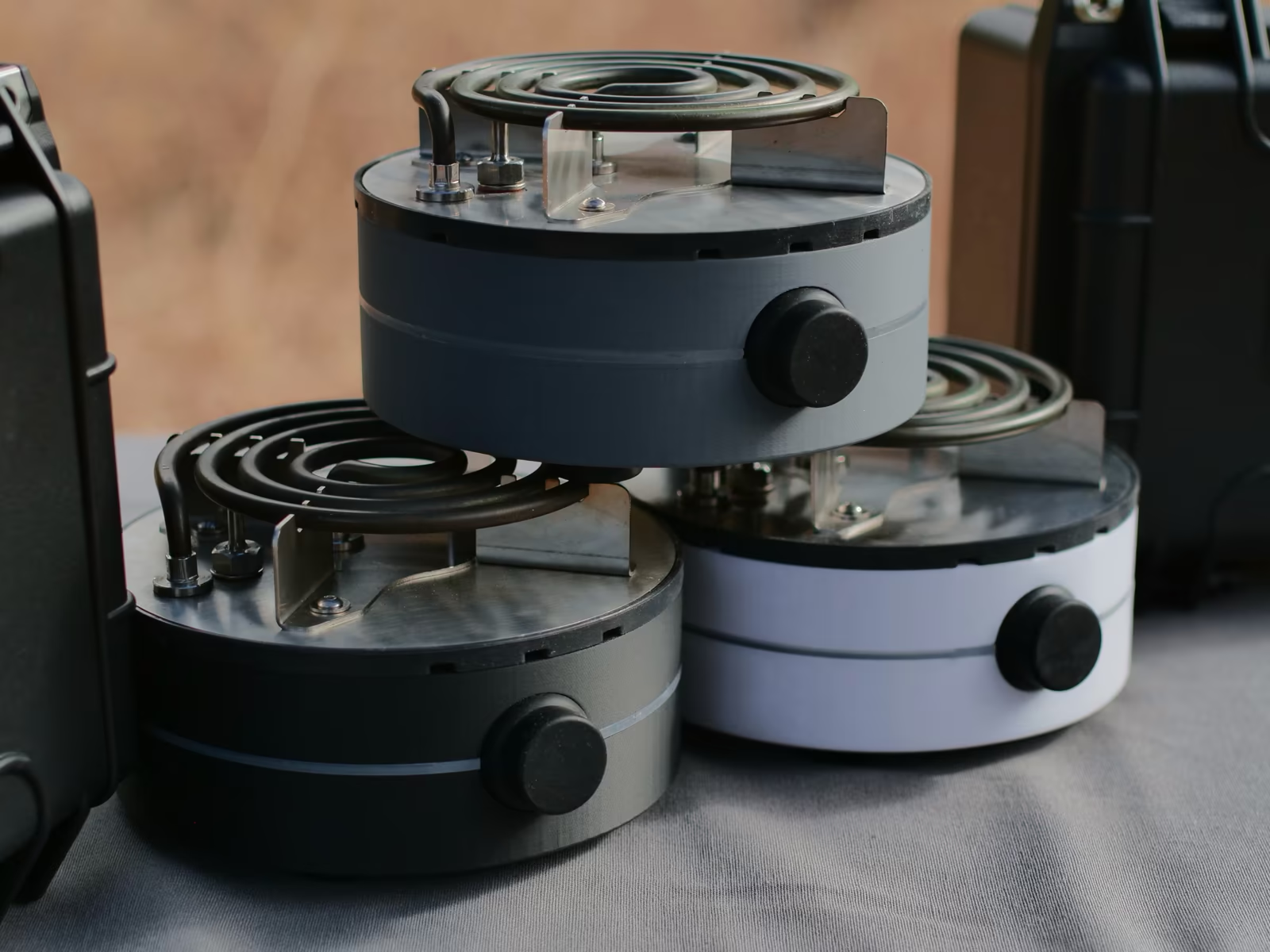
How we got here
Q1 2020
An Idea Emerges…
During the midst of a pandemic, the first concepts of the ElementOne are thought of inside Willy’s garage.
Q3 2020
First Major Prototype
The first version of the ElementOne was hacked together using spare parts that were laying around in order to create an electric stove that could simply be controlled by Bluetooth, nothing else.
Q2 2021
Concept Finalized
The original idea for the ElementOne was to keep things simple, it was only going to be a remote controlled stove. However, as the prototypes were developed further, we decided to expand the concept to a full smart-home experience on-the-go.
Q4 2021
Next Major Prototype
While our first prototypes were about functionality, which we solved, we now had to figure out how to put everything into a nice, portable package that would last. Our initial ideas for this led us to a metal shell, which we would later find out was a mistake. While it was durable, the metal enclosure would turn the insides into an oven and fry the electronics.
Q3 2022
The ElementOne Comes Together
By this point, we had finally landed on the circular design we largely see today. It was still quite a bit different than the current version, especially internally, however the general look was finally settled on due to finding the ideal enclosure material and geometry to ensure the stove holds up to the high temperatures required.
Q2 2023
Internal Heat Issue Finally Solved
While we had solved the external heat problem, putting a computer less than 4 inches away from a 1,300 degree Fahrenheit heating element was a different beast entirely. It wasn’t until we simulated countless airflow paths, structured our internals in a way to best keep things cool, and designed a custom silicone insulator that we were able to keep the internal temperatures at a comfortable level.
Q4 2024
Testing Complete
We spent way more time than we probably needed battle-testing the ElementOne in every way we could think of. We wanted to make sure, if there were any issues, we were the ones that found them so we could fix them before it ends up in your hands. Our testing concluded with a two-month long test where the ElementOne was kept on 75% power, 24/7, outside. The results? It still worked like new with nearly 1,500 hours of continuous runtime.
Q1 2026
Supply Chain Secured
In the time between finalizing the ElementOne and now, we have been settling on manufacturers for our parts and thoroughly testing the samples we receive. This is stuff we wanted to lock in before we announced our Kickstarter to ensure our backers receive their ElementOne units in a timely manner. During this time, we were also able to secure both our trademark for OLIS and our design patent for the ElementOne itself.
Q4 2026 December 8
Kickstarter Launch
We’re proud to present the ElementOne. Over the years, we have gone through countless variations, tens of kilograms of 3D printing filament, and thousands of individual sample parts and sub-components because we wanted to make sure all of our backers receive the best experience possible. We thank everyone that has joined us on this journey.
Q1 2028 Estimated
Orders Fulfilled
One week after the campaign ends, we will place orders for all the parts we will need. It will take around 2–3 months for all of the parts to arrive, at which point, we will immediately begin assembling each and every unit by hand. Each ElementOne will go through a thorough QA process to ensure that when you open your ElementOne box, you are met with a pristine and fully functional unit without any issues.
Less to throw away
The world threw out 62 million metric tons of electronics in 2022, and less than a quarter of it was documented as collected and recycled. We designed ElementOne to be kept and fixed, not replaced.
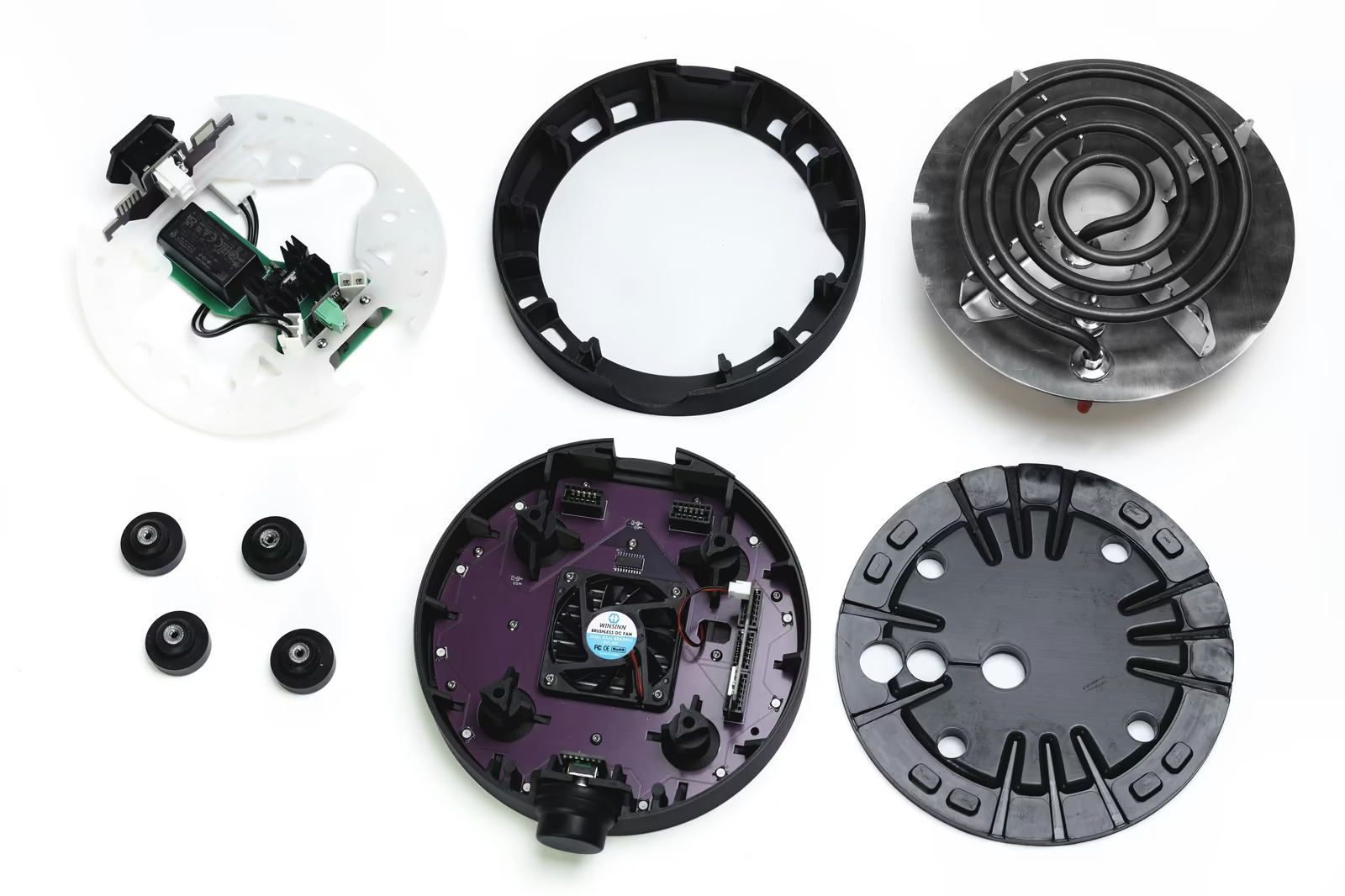
Fix the part, keep the stove
We split ElementOne into modules because we kept breaking prototypes in testing, and swapping one module beat rebuilding a stove. It works the same way for you. Its seven circuit boards each do one job, they come out with the tools in the box, and spare parts are available as add-ons. We’ll keep offering replacement parts for as long as we’re able.
No fuel cans
Many camp stoves burn single-use 1 lb propane cylinders, and North America goes through about 40 million of them a year. Even empty ones can still hold some gas, which makes them hazardous to throw away. ElementOne runs on electricity, so there’s no can to buy, carry or toss.
Sources: Global E-waste Monitor 2024 (ITU and UNITAR); LA County Public Works.
Meet the Team
The ElementOne story begins with our founder, William, who envisioned creating a tech product for daily use. He partnered with Leo, an innovative engineer, and Mihir, a top-tier full-stack developer (both Los Angeles and Las Vegas AT&T Hackathon winners). Together, we identified a massive problem: the smart-home industry is dominated by big players that want to maximize profit at the expense of their biggest supporters. We wanted to change that so we set our sights on an appliance that hasn’t truly been innovated on in over 100 years: the portable electric stove.
The process wasn’t easy. COVID-19 caused a bunch of delays, but through relentless persistence and testing, we iterated on countless designs and materials to ensure that the final unit was something we could all be proud of.
We didn’t just find a good design; we engineered a modular masterpiece. During testing, we would push the stove beyond its limits, and of course we would break things. This made testing time consuming and costly, so we thought, why not split everything into modules and have them just snap together? Not only would that make testing easier, it would make the whole unit something that would last a lot longer with far less waste and would align with our interest in keeping inline with the Right to Repair movement. It would also allow us to release upgrade kits down the line as technology improves, so instead of purchasing an entirely new stove when you want to upgrade, you can simply upgrade a single module for a lot less.
Just because we made things modular, doesn’t mean we designed things to break, we designed it as a final safety net. The ultimate proof? We left the original ElementOne prototype running continuously, 24/7, for 60 days. William still uses that same unit, daily, and it’s been over a year at this point. No components replaced. This isn’t just theory; this is proven engineering that will save users thousands over the years.
We are ready to revolutionize cooking—from the studio apartment, to the van-lifer, to the professional chef, and beyond. This campaign isn’t just about launching a stove; it’s about validating that high-quality, sustainable engineering still matters.
That’s where you come in. Let’s change the industry. Together.
Questions for us? Email support@olis.pro

William Zargaryan
Founder and CEO
Had the idea for ElementOne and runs OLIS, from marketing to logistics.

Leo Boghozian
Mechatronics engineer
Leads ElementOne’s design and testing, and is getting it ready for production.
LinkedIn
Mihir Desai
Full-stack developer
Designs the circuit boards and writes the firmware, the OLIS Home app and the services behind it.
LinkedIn